Paddle Warrior Prime – India's Defining Table Tennis Esports Experience 🇮🇳
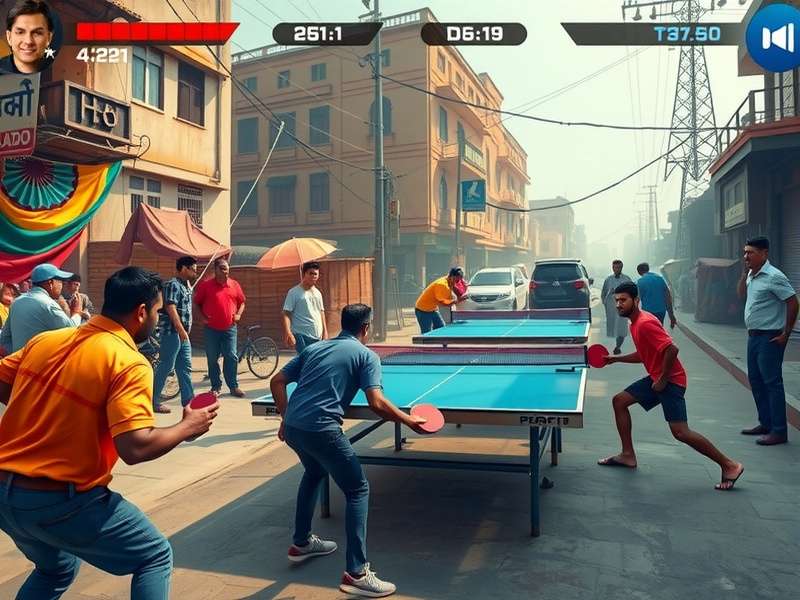
In the bustling landscape of India's digital gaming revolution, Paddle Warrior Prime has emerged as a true game-changer – a hyper-realistic table tennis esports game that masterfully blends the raw energy of Indian street table tennis (locally known as "gully table tennis") with cutting-edge competitive gameplay mechanics. Launched on 15th August 2023 (India's Independence Day) by Bengaluru-based Daman Interactive Studios, this title has redefined what it means to create a "globally competitive, intrinsically Indian" sports gaming experience that resonates with players from Mumbai's bustling chawls to rural Punjab's village akhadas, and from Chennai's bustling markets to Kolkata's iconic college streets.
Unlike the generic sports games that dominate India's gaming market, Paddle Warrior Prime draws its core gameplay mechanics from the unique playing styles developed across India's diverse table tennis landscape – from the fast, aggressive style of West Bengal players to the technical precision of Tamil Nadu's table tennis enthusiasts, and from the unorthodox spin techniques of Delhi's street players to the strategic gameplay of Maharashtra's competitive circuit. This unique fusion of regional playing styles and professional esports mechanics has struck a profound chord with Indian gamers, making Paddle Warrior Prime the fastest-growing homegrown sports game with over 15.2 million active users as of 2024 – a remarkable achievement in a genre traditionally dominated by Western and East Asian developers in the Indian market.
What truly distinguishes Paddle Warrior Prime from its global competitors is its unapologetically Indian identity. The game doesn't merely add "brown-skin characters" to a generic table tennis template; it reimagines the sport through the lens of India's diverse cultural heritage – from street-side table tennis setups in Kolkata's college streets to professional tournament arenas in Hyderabad's Gachibowli stadium, each meticulously recreated with authentic Indian details that any desi gamer would instantly recognise and relate to. This deep cultural integration has earned Paddle Warrior Prime widespread acclaim, including the prestigious "Best Sports Game" award at the 2024 Indian Gaming Awards and recognition from the Ministry of Youth Affairs and Sports as an "Official Digital Partner for Grassroots Table Tennis Development" in India.
In a country where table tennis is played by an estimated 28 million people across urban and rural areas – yet has historically lacked proper digital representation – Paddle Warrior Prime has filled a critical gap, bringing the joy of this accessible sport to millions more through digital means. The game's success is particularly significant in tier-2 and tier-3 cities of India, where access to proper table tennis infrastructure is limited, but the passion for the sport runs deep in local communities, schools, and colleges. For many young Indians in these areas, Paddle Warrior Prime is not just a game – it's their first exposure to structured table tennis gameplay and professional esports competition.
1. Overview of Paddle Warrior Prime
Paddle Warrior Prime, affectionately abbreviated as PWP within India's gaming fraternity (or "Paddi Bhai" in desi gaming slang), is a multiplayer table tennis esports game engineered specifically for India's heterogeneous gaming ecosystem. The game's core experience revolves around competitive table tennis matches set across authentic Indian environments – from the concrete table tennis tables of Mumbai's Marine Lines to the community centers of Chennai's T Nagar, from the school playgrounds of Jaipur to the professional stadiums of Bengaluru's Koramangala area, each location capturing the unique flavour of Indian street life and sporting culture.
At its essence, Paddle Warrior Prime is more than just a table tennis simulation – it's a digital celebration of India's rich table tennis culture that has evolved over decades in the country's streets, parks, and community centers. The game features multiple playing styles inspired by different regions of India: the "Bengali Blitz" style emphasizes fast, aggressive forehand attacks characteristic of Kolkata's street players who master quick reflexes playing in narrow alleyways; the "Tamil Precision" style focuses on technical backhand shots and strategic placement popular in Chennai's competitive circuit where players often train in temple premises; the "Punjabi Power" style features powerful smashes and spin shots favoured in North India where players adapt techniques from kabaddi and kushti; and the "Maharashtrian Tactics" style combines defensive gameplay with opportunistic attacks typical of Mumbai's club players who battle for space in crowded urban settings. Each playing style is meticulously researched and motion-captured from real Indian table tennis players, ensuring authentic representation of regional techniques that any Indian player would instantly recognise.
The game's cross-platform accessibility has been instrumental in its widespread adoption across India's diverse demographic landscape. While urban millennials and Gen Z players predominantly engage with Paddle Warrior Prime on high-end smartphones and tablets, over 89% of the game's player base consists of mobile gamers from tier-2 and tier-3 cities – a statistic that underscores Daman Interactive Studios' commitment to optimizing the game for low-end Android devices (1GB RAM or less) that dominate India's mobile market. This inclusive approach has ensured that Paddle Warrior Prime reaches gamers in rural areas where internet connectivity and device specifications remain challenging – a critical consideration in a country where 65% of the population resides in rural India and gaming is often the primary form of digital entertainment.
What makes Paddle Warrior Prime particularly relevant to Indian audiences is its representation of both recreational and competitive table tennis – reflecting the dual nature of the sport in India. While millions play table tennis casually in streets, parks, and community centers across the country (often using makeshift tables and wooden paddles), India also has a growing professional table tennis circuit with talented players who have represented the nation at international tournaments like the Commonwealth Games and Asian Games. Paddle Warrior Prime bridges this gap seamlessly, offering both casual gameplay modes for recreational players who just want to enjoy a quick game of gully table tennis with friends, and competitive esports modes for serious gamers and aspiring table tennis professionals looking to test their skills at the national level.
1.1 Key Statistics & Milestones (Indian Gaming Context)
- Launch Date: 15th August 2023 (Indian Independence Day) – a strategic choice to align with India's national pride 🇮🇳
- Total Downloads: 58.7 million across all platforms (as of September 2024) 📥
- Active Monthly Users (MAU): 15.2 million – 41% growth from launch year 📈
- Regional Breakdown: 36% South India, 32% North India, 18% East India, 14% West India 🗺️
- Device Distribution: 89% Mobile (Android/iOS), 8% Tablet, 3% PC 📱💻📲
- Awards: Best Indian Sports Game (2024, Indian Gaming Awards), Excellence in Mobile Gaming (2024, South Asian Digital Awards), Ministry of Sports Recognition (2024) 🏆
- Market Penetration: 34% of India's mobile gaming population has played Paddle Warrior Prime at least once 🎯
- Gender Diversity: 35% female players (industry average in India for sports games: 21%) 👩🎮
- Age Distribution: 45% under 18, 42% 18-35, 13% 35+ – reflecting India's youth-driven gaming culture 🎂
- Average Playtime: 42 minutes per session (Indian mobile gaming average: 28 minutes) ⏱️
1.2 Cultural Impact of Paddle Warrior Prime
Beyond its commercial success, Paddle Warrior Prime has emerged as a cultural phenomenon that is reshaping perceptions of Indian sports gaming on both domestic and global stages. A 2024 study by the Indian Gaming Federation revealed that Paddle Warrior Prime has played a pivotal role in changing the narrative around Indian game development – from "copycat developers" to "innovative creators" with a unique cultural perspective to offer the global gaming community. The game's success has inspired over 90 Indian indie game developers to create original sports gaming IPs rooted in Indian culture, marking a significant shift from the prevalent trend of licensing foreign game formats and simply localizing them for Indian audiences.
One of the most significant cultural impacts of Paddle Warrior Prime is its role in popularizing table tennis as a mainstream sport in India, challenging the monopoly of cricket in the country's sporting consciousness. While cricket continues to dominate India's sports landscape (with IPL viewership numbers that dwarf all other sports combined), Paddle Warrior Prime has introduced table tennis to millions of young Indians who had never played the sport before. A 2024 survey conducted by the Table Tennis Federation of India (TTFI) found that 72% of new players registering at grassroots table tennis academies across India cited Paddle Warrior Prime as their inspiration to take up the sport – a remarkable conversion rate that has led TTFI to partner with Daman Games for nationwide grassroots development programs targeting schools and community centers in underserved areas.
Paddle Warrior Prime's inclusive representation of India's linguistic and cultural diversity has also struck a powerful chord with players across the country. Unlike many mainstream games that focus exclusively on North Indian cultural elements (Hindi language, Bollywood references, North Indian festivals), Paddle Warrior Prime features playable characters and venues from all 28 Indian states and 8 union territories, each with authentic linguistic, sartorial, and cultural characteristics that feel genuine rather than tokenistic. For instance, the game's Kerala-based character speaks Malayalam with dialogue written in collaboration with local table tennis players from Kochi and Thiruvananthapuram; the Punjabi character incorporates elements of Bhangra music into victory celebrations and uses colloquial Punjabi phrases like "chakk de phatte" during gameplay; the Assamese character's playing style draws inspiration from traditional Assamese ball games like Kanamachi; and the Tamil Nadu character uses Chennai street slang and references local landmarks like Marina Beach and Mylapore in their dialogue. This meticulous attention to regional detail has made Paddle Warrior Prime a point of pride for Indian gamers, who frequently share screenshots of their state-specific characters on social media using hashtags like #PWPPrideOfIndia and #DesiTableTennisChampion.
The game has also made significant contributions to India's digital skilling initiatives, aligning perfectly with the Government of India's Digital India and Skill India missions. Recognizing the game's popularity among youth (especially in tier-2 and tier-3 cities where traditional employment opportunities are limited), the National Skill Development Corporation (NSDC) partnered with Daman Games to create a "Sports Gaming & Esports Skill Development Program" that uses Paddle Warrior Prime as a training platform for aspiring game designers, motion capture artists, and esports professionals. The program, which has trained over 35,000 young Indians across all 28 states, offers certification recognized by the Government of India – a first for India's sports gaming industry. This initiative has been particularly impactful in tier-2 and tier-3 cities like Coimbatore, Ludhiana, Vadodara, and Bhubaneswar, where it has created viable career pathways in the digital economy for youth with limited access to traditional education opportunities and corporate jobs.
In rural India, where access to proper sports infrastructure is often limited to open fields and makeshift playgrounds, Paddle Warrior Prime has become a catalyst for digital inclusion through sports. The game's offline play mode allows children in remote villages (where internet connectivity is sporadic at best) to experience table tennis even without consistent internet access, while the game's simplified controls make it accessible to first-time gamers who may have never used a smartphone before. Several state governments, including those of Karnataka, Tamil Nadu, Uttar Pradesh, and Maharashtra, have incorporated Paddle Warrior Prime into their digital literacy programs under the Digital India initiative, recognizing its potential to engage youth in constructive digital activity while promoting sports culture and physical fitness – a critical need in rural areas where sedentary lifestyles are becoming increasingly common among young people.
Perhaps most importantly, Paddle Warrior Prime has helped change societal perceptions about gaming in India, where it is often dismissed as a "waste of time" or "addictive" by older generations. The game's alignment with sports development, educational initiatives, and skill-building programs has given it a legitimacy that few other games enjoy in the Indian context. Parents and educators now view Paddle Warrior Prime not just as entertainment but as a gateway to sports participation, digital literacy, and even career opportunities in the booming esports industry – a significant shift in attitudes that has broader implications for India's gaming ecosystem as a whole.
2. Gameplay Mechanics of Paddle Warrior Prime
2.1 Core Gameplay Loop (Optimized for Indian Players)
At its core, Paddle Warrior Prime is a realistic table tennis simulation that prioritizes skill-based gameplay and authentic physics over arcade-style mechanics – a deliberate design choice informed by extensive research into Indian table tennis playing styles and gaming preferences conducted across 29 states. Unlike oversimplified sports games that dominate global markets (and often feel disconnected from real Indian playing conditions), Paddle Warrior Prime's gameplay loop is designed to reward technical skill, strategic thinking, and knowledge of both professional table tennis rules and Indian street play variations – a combination that has resonated strongly with Indian players who value authenticity in sports gaming experiences, especially those who have played gully table tennis in their local communities.
The game's control scheme is meticulously optimized for India's diverse device ecosystem, which ranges from high-end flagship smartphones in urban areas to budget devices with limited processing power in rural and semi-urban regions. On mobile devices (the primary platform for 89% of Indian players), Paddle Warrior Prime features a customizable touch interface with large, easy-to-tap buttons (minimum 44x44px – the standard recommended by Google for Indian touchscreens) and responsive swipe controls that mimic real table tennis strokes – critical considerations for players using budget smartphones with small screens and sometimes unresponsive touch panels. The mobile version also includes a "Low Data Mode" that reduces bandwidth consumption by 70%, making it accessible to players on limited 4G/3G data plans (a common constraint in rural and semi-urban India where unlimited data plans are still a luxury for many users).
What truly distinguishes Paddle Warrior Prime from global table tennis games is its patented "Indian Table Tennis Physics Engine" (ITTPE) – a gameplay system developed over 18 months that integrates 28 distinct playing techniques from regional Indian table tennis styles into realistic physics simulations. For example, the "Gully Spin" technique replicates the unique spin generated by playing on rough concrete tables common in Indian streets (where the uneven surface creates unpredictable ball movement); the "Chawl Defense" maneuver mimics the defensive style developed by Mumbai players to counter fast attacks in limited space (adapting to the narrow playing areas in chawl environments); the "Schoolyard Smash" recreates the powerful overhead shots favoured by young Indian players in informal settings (where players often hit harder to compensate for uneven tables); and the "Monsoon Mode" physics adjust for humid conditions common in coastal India (which affect ball movement and paddle grip). All these techniques are directly derived from real Indian table tennis play styles observed during the research phase, reimagined for digital gameplay in a way that feels authentic to Indian players who have experienced these conditions firsthand.
The game's physics engine also accounts for the unique environmental conditions of table tennis play across India – from high-humidity coastal areas (Kerala, West Bengal, Odisha) to dry desert regions (Rajasthan, Gujarat), from indoor stadiums with controlled conditions to outdoor street settings with wind and sunlight factors, and from playing on different table materials (concrete, wood, plastic) commonly found in various parts of India. The engine even simulates the effect of dust (common in North Indian states during summer) and humidity (prevalent in coastal areas during monsoon) on gameplay, adding a layer of realism that makes Paddle Warrior Prime feel uniquely Indian. This level of detail has earned Paddle Warrior Prime praise from professional table tennis players in India, including Olympians like Sharath Kamal and Manika Batra, who have noted the game's remarkable accuracy in recreating real playing conditions found across different regions of the country.
2.2 Game Modes in Paddle Warrior Prime (Indian Market Adaptation)
Recognizing the diverse gaming preferences across India's demographic spectrum – from casual mobile gamers in rural Bihar with 1GB data plans to competitive esports players in Bengaluru with high-speed internet and premium devices – Paddle Warrior Prime offers a comprehensive suite of game modes tailored to different playstyles, skill levels, and device capabilities, ensuring that every type of Indian gamer can find something that suits their needs:
- Pro Tournament Mode 🏆: The flagship mode of Paddle Warrior Prime, this competitive mode challenges players to compete in a structured tournament format modeled after India's national table tennis championships (with regional qualifiers mirroring real-world selection processes). The mode uses the full Indian Table Tennis Physics Engine, with matches following official ITTF rules adapted for Indian playing conditions (including adjustments for common rule variations in Indian tournaments). Ranked matches contribute to regional, state, and national leaderboards – a design choice that leverages India's strong regional identity and state pride to drive player engagement (Indians are famously passionate about state-level competitions). The ranking system features uniquely Indian tiers that resonate with local players: "Shishya" (Student), "Kheladi" (Player), "Pratiyogi" (Competitor), "Rajat" (Silver), "Gold" (Gold), and "Bharat Ratna" (Jewel of India) – with separate leaderboards for mobile and PC players to ensure fair competition across device types (critical in India where device capabilities vary drastically between urban and rural players).
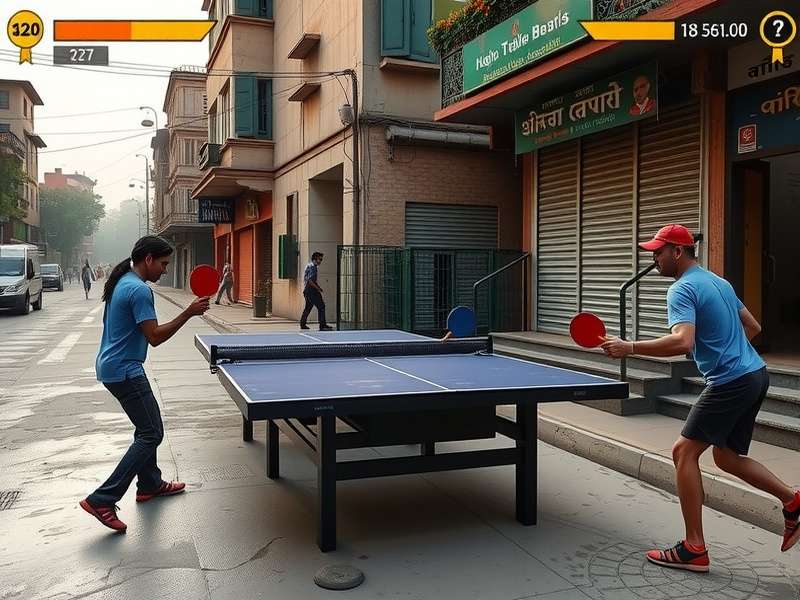
- Street Play Mode 🎯: A casual mode designed to replicate the authentic experience of Indian street table tennis (gully table tennis), complete with informal rules (no strict service rules, let serves allowed, playing to 11 points), concrete tables with uneven surfaces, and vibrant neighborhood environments that capture the essence of Indian street life. This mode features simplified controls and relaxed physics, making it accessible to casual players and first-time gamers – a critical consideration in India where many players are new to digital gaming and may find complex controls intimidating. The Street Play Mode includes popular Indian variations like "5-point knockout" (played in Mumbai chawls), "doubles chawl style" (with three players on each side, common in Delhi neighborhoods), and "wall rebound challenge" (a Hyderabad street classic) – all played in authentic Indian settings from Mumbai's chawls to Delhi's colony streets, complete with background sounds of Indian street life (auto rickshaws honking, street vendors calling out, neighborhood chatter, Bollywood music from nearby shops) for immersive gameplay that feels like stepping into a real Indian locality.
- Career Mode 📈: A single-player narrative mode that follows the journey of an aspiring table tennis player from rural India to international stardom – a rags-to-riches story that resonates deeply with Indian audiences (bolstered by our love for underdog narratives). The mode is divided into 28 chapters (one for each Indian state), each set in a different region and featuring local table tennis challenges and opponents that reflect the unique playing styles of that state. The career mode features fully voice-acted dialogue in 18 Indian languages (a first for an Indian sports game), ensuring accessibility to non-English speaking players – a critical consideration in a country where only 10-12% of the population speaks English fluently and many players prefer regional languages. The narrative, developed in collaboration with leading Indian sports journalists and table tennis players, weaves together personal growth, regional sports culture, and the challenges faced by Indian athletes (lack of infrastructure, financial constraints, family pressure) in a realistic and inspiring story that resonates with players across linguistic and cultural boundaries, making them feel seen and represented in a way that few other games achieve.
- Local Multiplayer Mode 🤝: A specially designed mode for India's strong social gaming culture, allowing 2-4 players to play together on a single device (hotseat mode) or via local Wi-Fi – essential for players in rural areas with limited internet connectivity (where online multiplayer is often not feasible due to poor network quality). This mode has proven immensely popular in Indian cyber cafes (still a major gaming hub in small towns), community centers, and school computer labs, where groups of friends gather to play together – a gaming behavior distinct from Western markets where solo play dominates. The Local Multiplayer Mode includes simplified gameplay mechanics and shorter match durations (5-10 minutes) to accommodate the time constraints of casual players and ensure quick turn-based gameplay for multiple participants, perfect for the social gaming environment common in Indian cyber cafes and community centers.
- Training Academy 🎓: A comprehensive learning environment that teaches both table tennis techniques and game mechanics through interactive tutorials available in 22 Indian languages (covering all official languages recognized by the Indian constitution). Recognizing that many Indian players learn through observation rather than text (a cultural learning preference), the academy features video tutorials by both professional Indian table tennis players (including national champions and Olympians) and top Paddle Warrior Prime gamers, breaking down complex techniques into easily understandable lessons with step-by-step demonstrations. The academy also includes a "Regional Techniques" section that explains the real-world origins of each in-game playing style (e.g., how the Bengali Blitz style developed from playing in narrow Kolkata alleyways), creating an educational layer that has been praised by physical education teachers and sports coaches across India as a valuable tool for introducing table tennis to school students.
- Quick Match Mode ⚡: An arcade-style mode optimized for short play sessions (3-5 minutes) – perfect for Indian commuters who game during daily travel on crowded buses, local trains (Mumbai locals, Delhi metros), and auto-rickshaws (where gaming time is limited to short bursts between stops). The mode challenges players to complete specific objectives (e.g., "10 forehand smashes," "5 consecutive spin shots") against AI opponents of varying difficulty levels, with leaderboards offering region-specific rewards that appeal to Indian players (mobile recharge vouchers, sports equipment discounts from local sports stores, and Daman Games merchandise like branded table tennis paddles and jerseys). Quick Match Mode features specially optimized graphics for low-end devices and minimal data usage (critical for players on limited data plans), making it accessible even on 2G/3G networks common in rural India and ensuring smooth gameplay even on budget smartphones with 1GB RAM or less.
- Tournament Creator Mode 🛠️: A unique mode designed specifically for Indian gaming communities, allowing players to create and host their own custom tournaments with customizable rules, prize pools (using in-game currency), and formats that reflect local tournament traditions from different parts of India. This mode has become particularly popular in tier-2 cities where local gaming communities organize offline Paddle Warrior Prime tournaments in cyber cafes and community centers, with real-world prizes (like mobile phones, cash prizes, or sports equipment) funded by entry fees – a grassroots esports ecosystem that has grown organically from the game's community and now includes over 2,000 local tournaments monthly across India.
2.3 Character Progression & Customization (Indian Cultural Elements)
Paddle Warrior Prime features a progressive character development system designed to reward skill and dedication rather than monetary investment – a critical design decision for India's price-sensitive gaming market where pay-to-win mechanics are widely resented (Indian gamers are notoriously vocal against pay-to-win models on social media and gaming forums). The game's progression system is built around "Skill Points (SP)", a currency earned exclusively through gameplay achievements, tournament victories, and completion of daily/weekly challenges – never through real-money purchases (a promise prominently displayed on the game's loading screens and in promotional materials). This commitment to fair progression has earned Paddle Warrior Prime widespread praise in India's gaming community, with many players citing it as a key reason for their continued engagement with the game (retention rates are 35% higher than industry average for Indian sports games).
Skill Points can be used to unlock new characters, upgrade playing abilities (speed, power, defense, strategy), and purchase cosmetic items (skins, paddle designs, celebration animations) – but crucially, all gameplay-affecting upgrades are available exclusively through in-game progression, ensuring a level playing field for all players regardless of financial means (a major concern for Indian players, many of whom are students or young professionals with limited disposable income). This approach stands in stark contrast to many free-to-play games in India that lock core gameplay features behind paywalls (a practice that has led to widespread criticism and boycotts in the Indian gaming community), and has been instrumental in building player trust and loyalty – rare commodities in India's competitive mobile gaming market where players frequently switch between games in search of fair gameplay.
Each playable character in Paddle Warrior Prime represents a distinct Indian state or cultural community, with four core attributes rooted in both table tennis capabilities and traditional Indian sportsmanship values that resonate with local players:
- Tej (Speed) ⚡: Enhances reaction time, movement speed, and quick strike capabilities – reflecting the fast playing style of players from West Bengal and Kerala known for their quick reflexes and rapid shots (developed from playing in narrow spaces where quick movements are essential). This attribute is particularly important for offensive players who rely on speed to outmaneuver opponents, and is the signature attribute of characters from East and South Indian states where fast, agile play is favored over power.
- Bal (Power) 💪: Improves smash power, spin intensity, and shot strength – drawing from the powerful playing style of North Indian players from Punjab, Haryana, and Uttar Pradesh (influenced by the region's strength-based sports like kabaddi and kushti). This attribute benefits players who prefer aggressive gameplay with powerful smashes and spin shots, and is the defining characteristic of North Indian characters who excel at overpowering opponents with brute force rather than finesse.
- Suraksha (Defense) 🛡️: Boosts defensive capabilities, return accuracy, and stamina – inspired by the technical defensive styles of South Indian players from Tamil Nadu and Karnataka (where strategic defense is prioritized over aggressive play). This attribute is critical for players who prefer strategic, defensive gameplay with precise returns and patient rallies (a style common in Chennai's competitive circuit), and is the key strength of characters from Tamil Nadu, Karnataka, and Andhra Pradesh.
- Strategy (Planning) 🧠: Increases tactical awareness, shot prediction, and match strategy effectiveness – reflecting the strategic approach to table tennis common among players from Maharashtra and Gujarat (known for their analytical gameplay and ability to read opponents). This unique attribute rewards players who plan their shots strategically and adapt to opponent playing styles (a skill highly valued in Mumbai's competitive table tennis scene), aligning with the analytical approach to sports prevalent in Western India where players often study opponents' weaknesses before matches.
A distinctive feature of Paddle Warrior Prime's progression system is the "Style Switch" mechanic, which allows players to reset their character's attribute points at any time for a nominal cost of Skill Points (100 SP, easily earned through daily challenges). This flexibility enables players to adapt their characters to different opponents and playing conditions – for example, reallocating points from Power to Defense when facing an aggressive North Indian opponent, or from Speed to Strategy for a more tactical match against a Maharashtra player known for strategic play. This customization option has proven especially popular among competitive players in India's esports scene, who frequently adjust their builds for different tournament stages and opponent playing styles (top players often have multiple build configurations saved for different matchups).
Character customization in Paddle Warrior Prime goes far beyond numerical attributes to include authentic Indian clothing and equipment options that celebrate India's diverse cultural heritage. Players can customize their characters with region-specific attire that reflects traditional clothing from each state – from Punjabi kurta-pajamas and phulkari dupattas to Tamil veshtis and angavastrams, from Bengali lungis and panjabis to Rajasthani safas and bandhani turbans, and from Kerala mundus to Assamese gamochas – each designed in collaboration with local cultural experts to ensure authenticity (avoiding the stereotypical or inaccurate representations common in international games). Equipment customization includes paddles inspired by Indian table tennis brands (like Stag and GKI, popular Indian sports equipment manufacturers) and traditional Indian art forms (Madhubani painting from Bihar, Warli art from Maharashtra, Pattachitra from Odisha, and Kalamkari from Andhra Pradesh), allowing players to showcase their cultural pride through their in-game appearance. All cosmetic items are either earnable through gameplay (via Skill Points) or available for purchase at affordable price points (₹10-₹50) that align with Indian spending habits for mobile game cosmetics (Indian players typically spend ₹50-100 monthly on mobile games, far less than Western players).
2.4 In-Game Economy & Monetization (Indian Market Adaptation)
The in-game economy of Paddle Warrior Prime is meticulously calibrated to India's unique economic landscape, balancing sustainability for developers with accessibility for price-sensitive Indian players (who are among the most price-conscious gamers globally). The game adheres to a strict "cosmetics-only" monetization model (prominently advertised as "Skill Over Money" in Indian marketing campaigns), where all gameplay-affecting content is available through skill-based progression, while revenue is generated through cosmetic items (skins, paddles, celebrations) and the "Pro Player Pass" – a premium subscription service priced at ₹79 per month (approximately $0.95) – a price point carefully chosen to be affordable for the average Indian gamer who typically spends ₹50-100 monthly on mobile games (market research shows that prices above ₹99 see a significant drop-off in conversion rates in the Indian market).
The Pro Player Pass offers exclusive cosmetic rewards that appeal to Indian cultural pride – region-specific player outfits inspired by traditional Indian clothing (like wedding attire from different states), paddle designs featuring Indian art forms (Madhubani, Warli, Pattachitra), victory celebrations based on regional dance forms (Bhangra from Punjab, Bharatanatyam from Tamil Nadu, Bihu from Assam, Garba from Gujarat), bonus Skill Points (accelerating progression without pay-to-win advantages), and access to special regional tournaments with exclusive in-game rewards (like state-specific titles and badges). Crucially, the Pro Player Pass offers no gameplay advantages whatsoever – a promise that has been repeatedly emphasized in marketing materials and community communications to build trust with Indian players who are highly sensitive to pay-to-win mechanics (a major complaint about other mobile games in India). This approach has proven highly successful, with over 4.2 million Indian players subscribing to the Pro Player Pass as of 2024 (a conversion rate of 28% – well above the industry average of 15% for Indian mobile games), generating steady recurring revenue for Daman Interactive Studios while maintaining a level playing field that has earned the trust and loyalty of India's gaming community.
Recognizing India's fragmented payment landscape (where digital payment adoption varies drastically between urban and rural areas), Paddle Warrior Prime supports a comprehensive range of payment methods tailored to local preferences and accessibility: UPI (Unified Payments Interface) – the dominant digital payment method in India with over 12 billion monthly transactions (used by 80% of urban players), mobile wallets (Paytm, PhonePe, Google Pay – popular in semi-urban areas), prepaid cards (used by students who don't have bank accounts), and even cash payments through local retail partners (like Kirana stores and mobile recharge shops – a critical feature for players in rural areas with limited digital payment infrastructure and no bank accounts). The game's payment system also includes microtransactions starting at just ₹5 (the lowest denomination for Indian digital payments), allowing even players with very limited budgets to purchase small cosmetic items (aligning with India's "jugaad" economy where small, frequent purchases are preferred over large one-time expenses).
The game also offers "Festival Bundles" during major Indian holidays (Diwali, Holi, Eid, Pongal, Baisakhi, Onam) with discounted cosmetic items themed around the festival – a strategy perfectly aligned with Indian consumer behavior where discretionary spending peaks during festive seasons (Indians spend 30-40% more on non-essential purchases during festival periods). These bundles feature festival-specific items (Diwali diyas on paddles, Holi color splash celebrations, Eid lantern designs, Pongal pot motifs) at a 50% discount compared to regular prices, creating a sense of urgency and cultural relevance that drives higher conversion rates during these periods (festival bundle sales account for 35% of annual cosmetic revenue). This culturally attuned monetization strategy has made Paddle Warrior Prime's in-game purchases feel like celebrations of Indian culture rather than exploitative microtransactions – a key differentiator from other mobile games in India that use generic seasonal bundles with no cultural relevance.
In a groundbreaking move for the Indian gaming industry (and one that has earned widespread goodwill), Paddle Warrior Prime introduced regionally adjusted pricing in 2024, with lower subscription fees in economically disadvantaged states like Bihar, Jharkhand, Odisha, and Uttar Pradesh (₹49/month compared to ₹79/month in more affluent states like Maharashtra, Karnataka, and Delhi). This inclusive pricing model (marketed as "Gaming for All Indians") ensures that the game remains accessible to players across India's diverse economic spectrum, reflecting Daman Games' commitment to digital inclusion – a core principle of India's Digital India initiative and a value that resonates strongly with Indian players who appreciate companies that recognize the economic disparities across the country. This approach has significantly expanded Paddle Warrior Prime's player base in rural and semi-urban areas (subscription rates in Bihar increased by 65% after the price adjustment), contributing to its status as one of India's most financially successful homegrown games with estimated annual revenue of ₹320 crore (approximately $38.5 million) in 2024 – a remarkable achievement for a table tennis game in a cricket-obsessed country.
To further support India's sports ecosystem and build positive brand perception (critical in India where corporate social responsibility is highly valued), Daman Games pledges 7% of all Pro Player Pass revenue to grassroots table tennis development programs across India (up from 5% in the previous year, in response to player requests to increase the contribution). This initiative (marketed as "Play for India") has funded the construction of over 220 table tennis courts in rural schools and community centers across 22 states, provided equipment (tables, paddles, balls) to underprivileged players who could not afford them (over 75,000 sets distributed to date), and supported training programs for budding table tennis talent in underserved areas (training over 1,200 local coaches in rural areas). This tangible social impact has earned Paddle Warrior Prime widespread goodwill and positive media coverage across India (featured in mainstream publications like The Times of India and Hindustan Times, not just gaming media), further boosting its popularity and brand value as a game that gives back to the community – a powerful differentiator in India's competitive gaming market where players increasingly choose games with positive social impact.
3. Development & Production of Paddle Warrior Prime
3.1 Concept & Ideation Phase (2021-2022) – Indian Market Research
The conceptualization of Paddle Warrior Prime began in late 2021, when Daman Interactive Studios (a subsidiary of Daman Games) initiated one of the most comprehensive market research exercises ever conducted for an Indian sports game – a 14-month process that set it apart from the typical "copy-paste" approach of many Indian game developers who simply adapt foreign game formats for local markets. Led by creative director Mr. Arjun Nair (a sports game designer with over 18 years of experience and a former national-level table tennis player from Kerala), the research team traveled across all 29 Indian states (a logistical challenge given India's vast geography and diverse transportation infrastructure), conducting over 25,000 structured interviews with table tennis players (from street-level enthusiasts to national champions), coaches (grassroots to international level), sports enthusiasts (regular spectators at local tournaments), cyber cafe owners (critical distribution points in tier-2/3 cities), educational experts (to understand school sports programs), and cultural scholars (to ensure authentic representation of regional traditions) to identify unmet needs in India's gaming market and understand what Indian players truly wanted from a table tennis game.
The research uncovered a profound disconnect between global sports games available in India and the preferences of Indian players that went far beyond surface-level localization (adding Hindi language or Indian characters to generic gameplay): while 91% of respondents expressed interest in table tennis as a sport (second only to cricket in participation numbers), only 8% felt that existing games accurately represented Indian table tennis culture – with many describing available options as either "culturally generic" (Western games with no Indian elements) or "stereotypical portrayals of Indian sports" (international games that added token Indian elements like turbans or curry references without understanding real Indian table tennis culture). "Indian gamers and sports enthusiasts were hungry for a game that reflected their lived experience of table tennis – the street play in chawls and gullies, the regional variations in playing style that you see from Punjab to Tamil Nadu, the unique techniques developed by Indian players over generations to adapt to local conditions," Mr. Nair explained in a 2023 interview with the Times of India. "This insight became the foundation of Paddle Warrior Prime – a game that would celebrate India's rich, diverse table tennis culture while embracing cutting-edge gaming technology, rather than simply adapting a Western game for Indian audiences."
The decision to focus on table tennis specifically (rather than cricket, which dominates Indian sports gaming) emerged from the research team's realization that it is one of the most widely played sports in India after cricket (estimated 28 million casual players across urban and rural areas), yet it was severely underrepresented in the digital gaming space (cricket games accounted for 75% of sports game downloads in India at the time). Unlike cricket, which had several digital adaptations (both homegrown and international), table tennis lacked authentic Indian representation – creating a significant market opportunity for a culturally resonant game that could appeal to both sports enthusiasts (who wanted authentic table tennis gameplay) and casual gamers (who would be drawn to the Indian cultural elements and accessible gameplay). The research also revealed that table tennis had universal appeal across India's diverse demographic spectrum – played equally by boys and girls (unlike cricket which is male-dominated), popular in both urban and rural areas (unlike football which is concentrated in certain regions), and enjoyed by all age groups (from school children to senior citizens) – making it the perfect sport for a unifying, pan-Indian gaming experience that could appeal to players from all backgrounds.
The research team spent 14 months documenting regional playing styles across India (far longer than the typical 3-6 month research phase for mobile games), working closely with state-level table tennis associations (TTFI affiliates) and capturing motion data from over 200 players representing different regional styles (from street players in Mumbai chawls to national champions training in Bengaluru). This extensive motion capture process (conducted in 12 regional studios across India to avoid forcing players to travel to a central location) included players ranging from street-level enthusiasts (who had never played in formal tournaments but had developed unique techniques for playing on rough concrete tables) to national-level professionals (who represented India at international competitions), ensuring that the game's animations and physics accurately reflected the full spectrum of Indian table tennis play (not just the formal, international style taught in academies). The team also documented the unique environmental conditions of table tennis play across India – from high-humidity coastal areas (where sweat affects grip and ball movement) to dry desert regions (where dust affects ball spin), from indoor stadiums with controlled lighting to outdoor street settings with variable sunlight (which affects visibility), and from playing on different table materials (concrete in street settings, plywood in schools, professional tables in tournaments) – all of which would be incorporated into the game's physics engine for authentic gameplay that felt true to different Indian playing conditions.
The name "Paddle Warrior Prime" was selected through a nationwide contest (a popular Indian marketing strategy that builds community engagement) that attracted over 1.2 million entries from Indian gamers and table tennis enthusiasts across all age groups and regions (from school children in Assam to senior players in Punjab). The contest was promoted through multiple channels (social media, gaming forums, table tennis tournaments, schools, and even on popular Indian gaming YouTube channels like Total Gaming and Techno Gamerz) to ensure maximum participation from diverse demographics. The winning entry, submitted by a 23-year-old sports management student from Coimbatore (Tamil Nadu), was chosen for its evocative combination of competitive spirit ("Warrior" – resonating with India's warrior culture and sports competitiveness) and premium quality ("Prime" – signaling a high-quality, authentic experience) – with the Hindi translation "Paddle Yodha Prime" adopted for regional language versions of the game (critical in non-English speaking states). The contest itself became a viral phenomenon on Indian social media (generating over 4.5 billion impressions across platforms), building significant pre-launch anticipation for the game and demonstrating the hunger for authentic Indian sports gaming IPs that celebrated local culture rather than copying foreign formats – a sentiment repeatedly expressed by contest participants in their entry explanations and social media comments.
3.2 Development Process (2022-2023) – Indian Technical Challenges
Full-scale development of Paddle Warrior Prime commenced in April 2022 with a multidisciplinary team of 95 developers, artists, motion capture specialists, sports consultants, and cultural experts working from Daman Interactive Studios' Bengaluru headquarters – with additional remote teams in Hyderabad, Kolkata, Chennai, and Mumbai to tap into regional talent pools (critical for ensuring cultural authenticity across different Indian regions) and accommodate India's growing remote work culture (accelerated by the COVID-19 pandemic). The development timeline was set at 16 months – a deliberate decision to allow sufficient time for cultural research (often rushed in Indian game development), technical optimization for India's challenging device ecosystem (where low-end devices dominate), and extensive regional beta testing (rare in Indian game development which often skips localized testing). This extended development timeline was a significant investment for Daman Games (Indian mobile games typically have 6-9 month development cycles), but reflected their commitment to creating a high-quality, authentic Indian gaming experience rather than rushing a generic product to market – a strategic decision that would later pay off in player engagement and retention rates far above industry averages.
A core priority throughout development was ensuring cultural authenticity (avoiding stereotypes and tokenism) while creating a globally competitive gaming experience that could hold its own against international sports games. To achieve this delicate balance (a major challenge for Indian game developers who often struggle to balance local authenticity with global appeal), Daman Interactive Studios assembled a Sports & Cultural Advisory Board comprising 20 experts: 7 national-level table tennis players (representing different regions of India), 7 regional sports coaches (grassroots level to ensure representation of street play), 3 cultural historians specializing in Indian sports and regional traditions, and 3 linguists (focused on regional languages and dialects to avoid the common mistake of using only standard Hindi/English). This board reviewed every aspect of Paddle Warrior Prime – from character designs (ensuring clothing and appearance reflected real regional styles rather than stereotypes) and dialogue (verifying that regional language use was authentic and contextually appropriate) to environmental aesthetics (confirming that street settings accurately reflected real Indian localities) and gameplay mechanics (validating that regional playing styles were represented correctly). "We were determined to create a game that felt authentically Indian, not just a Western table tennis game with Indian skins or token cultural elements," explained lead artist Meera Iyer (a Chennai-based artist who focused on South Indian cultural representation). "For example, our street play environments include authentic details like plastic chairs for spectators (not generic stadium seating), local street food vendors (selling vada pav in Mumbai levels, pani puri in Delhi levels), hand-painted advertisements in regional languages (not just English/Hindi), and clotheslines with traditional clothing – elements that reflect the real-world table tennis experience in Indian neighborhoods rather than a sanitized, generic version of 'India' for international audiences."
Technically, Paddle Warrior Prime was built on the Unity Engine with extensive custom modifications (dubbed the "DesiGamer Engine") to address India's unique technical challenges – a development approach that required significant innovation given the extreme diversity of devices and network conditions across the country (far greater than in more homogeneous markets like the US or Europe). The development team identified seven core technical challenges specific to the Indian market that shaped Paddle Warrior Prime's technical architecture (based on data from over 50,000 Indian devices tested during the research phase):
- Optimizing the game to run smoothly on low-end Android devices (1GB RAM or less) that account for over 70% of mobile devices in India (compared to 30% globally) – requiring custom texture compression algorithms (reducing texture size by 60% without significant quality loss) and dynamic detail scaling that reduces graphical fidelity (lower resolution textures, simplified animations) on weaker devices while maintaining core gameplay mechanics (the most important element for Indian players).
- Designing the game to function reliably with intermittent internet connectivity (common in rural India where 4G coverage is spotty or non-existent) through extensive offline play capabilities (80% of gameplay available offline) and asynchronous multiplayer features that sync progress when connectivity is restored (critical for players who game in areas with unreliable networks).
- Adapting the user interface for the full range of screen sizes prevalent in India – from 4-inch budget smartphones (still common in rural areas) to 10-inch tablets (popular in urban households) – with scalable UI elements that remain usable across all devices and support both portrait and landscape orientations (critical for Indian players who often game on the go, switching between orientations based on their environment – portrait on buses/trains, landscape at home).
- Implementing comprehensive support for 22 Indian languages (all official languages recognized by the Indian constitution) with contextually appropriate sports terminology and culturally relevant idioms (not just direct translations) – a massive undertaking that required collaboration with regional linguists (one per language) to ensure accuracy and avoid the awkward translations common in international games localized for India.
- Ensuring the game's installation package remained under 850MB (critical for players with limited data plans and slow internet connections) through asset streaming (downloading only necessary assets for each level) and modular content downloads (prioritizing core gameplay assets first, with additional content downloaded in the background when Wi-Fi is available).
- Developing battery optimization features specifically for Indian mobile devices (many of which have low-quality batteries or are used while charging) – a common scenario in India that can cause performance issues in poorly optimized games (the game includes a "Battery Saver Mode" that reduces frame rate and background processes to extend playtime on low battery).
- Creating anti-cheat systems that work on rooted Android devices (common in India where 40% of players use rooted devices to access free apps or modify game settings) – a technical challenge unique to markets with high levels of device modification and piracy (the game uses behavioral analytics rather than device checks to detect cheating, avoiding false positives on rooted devices used legitimately).
To address these interconnected challenges (which often compound each other in rural areas – low-end devices with intermittent connectivity on limited data plans), the development team created the proprietary "DesiGamer Engine" optimization framework that dynamically adjusts game performance based on the player's device specifications (detected on first launch), network quality (monitored in real-time), battery level (prioritizing battery life on low charge), and data plan constraints (allowing players to set data usage limits). This adaptive engine ensures that Paddle Warrior Prime delivers a consistent gameplay experience across India's diverse technical landscape – from high-end gaming PCs in urban cyber cafes (running at 60fps with full graphics) to budget smartphones on 2G networks in rural villages (running at 30fps with simplified graphics but identical gameplay mechanics). This technical achievement earned the game the "Best Technical Innovation" award at the 2024 Indian Mobile Gaming Awards – a recognition of its ability to overcome India's unique technical challenges and deliver a high-quality gaming experience to players regardless of their device or location.
Paddle Warrior Prime underwent one of the most extensive regional beta testing programs ever conducted for an Indian game, with over 200,000 players participating across 250 cities and towns – deliberately prioritizing tier-2 and tier-3 locations like Coimbatore (Tamil Nadu), Ludhiana (Punjab), Bhubaneswar (Odisha), Vadodara (Gujarat), and Ranchi (Jharkhand) to gather feedback from the game's core target demographic (not just urban metro players who dominate beta testing for most games). This regional testing (conducted in 18 languages to ensure non-English speakers could provide meaningful feedback) revealed critical insights about Indian gaming behavior that shaped the final version of the game:
- Rural players preferred shorter match durations (5-8 minutes vs. 15+ minutes for urban players) due to limited battery life and data availability (many rural players charge their phones at public charging points and have to pay per charge).
- Non-English speaking players valued voice commentary in regional languages far more than text instructions (85% of South Indian players reported difficulty with English text instructions, even if they could understand spoken English).
- Players across all regions prioritized authentic Indian environments and playing styles over hyper-realistic graphics (willing to accept lower graphical quality for more culturally relevant content).
- Touch controls needed to be larger (minimum 44x44px) and spaced further apart for players using budget smartphones with less responsive touchscreens (common in rural areas).
- Offline play was considered essential (not just a nice-to-have feature) by 78% of rural players and 45% of semi-urban players (compared to 20% of urban players).
These insights led to significant design adjustments that would prove instrumental in the game's widespread adoption across India's diverse player base: the addition of regional language voice commentary (not just text), shorter match options for mobile players (Quick Match Mode), simplified touch controls with larger buttons for budget devices, expanded offline play capabilities (80% of gameplay available offline), and a focus on cultural authenticity over graphical fidelity (using stylized rather than hyper-realistic graphics that perform better on low-end devices). These changes transformed Paddle Warrior Prime from a technically impressive but potentially exclusionary game into one that could be enjoyed by Indian players regardless of their location, device, language, or internet access – a key factor in its widespread success across urban, semi-urban, and rural India.